
Searching Montgomery County Civil Dockets
Search ARCourts is the statewide public route to Montgomery County civil docket information. It lets you search by Cases or by Participants. A party search takes a first, middle, and last name; for an organization or a case-description search, use the name as it appeared in the filing. Filters can narrow results by Montgomery County, court location, start and end dates, case type, and status.
Got a case number from a summons, order, or file stamp? Use it exactly, punctuation included. Without one, search each party or organization on its own, then compare the case style, filing court, type, and date. A docket hit is only the start. Open the full case to review its events and entries.
- Choose a case or participant search in Search ARCourts.
- Enter the exact civil case number or legal party name.
- Filter for Montgomery County and the correct Circuit or District court.
- Open the case and read Events and Docket Entries in date order.
- Ask the record-owning clerk for any pleading, order, or certified judgment not available online.
Montgomery County Civil Docket Limits
Where a Montgomery County civil docket begins depends on two things. One is the amount of relief sought. The other is the type. The Arkansas Judiciary’s 2025 court-structure chart gives State District Courts civil jurisdiction up to $25,000. Small-claims jurisdiction runs up to $5,000. Circuit Court keeps general jurisdiction. So a large contract, tort, or property action normally lands on the Circuit docket. A qualifying small claim goes to the District docket.
| Civil matter | Likely court | Custodian |
|---|---|---|
| General civil claim | Montgomery County Circuit Court | Montgomery County Circuit Clerk |
| Limited civil claim up to $25,000 | Mount Ida District Court | District Court clerk |
| Small claim up to $5,000 | Mount Ida District Court | District Court clerk |
| Domestic relations or probate | Montgomery County Circuit Court | Montgomery County Circuit Clerk |
Money is not the whole test. The remedy or case category can matter too. When an eviction, possession, probate, or family filing does not fit a simple dollar test, ask the clerk which docket holds the action.
Inside a Montgomery County Civil Docket
Think of the Montgomery County civil docket as a dated index of the case. The summary identifies the number, court, civil type, filing date, and status. Participant fields place plaintiffs, defendants, petitioners, respondents, and attorneys in their procedural roles. Events list the date, time, room, location, and judge for a setting. Docket Entries record each filing or court action. Each entry carries a timestamp, description, detail, actor, and document field.
| Case number | The court-assigned identifier; Circuit civil matters may use a prefix such as 49CV. |
|---|---|
| Case style | The caption or abbreviated party names used for the action. |
| Participants | Plaintiff, defendant, petitioner, respondent, and attorney roles where published. |
| Events | Scheduled date, time, room, location, type, and judge where entered. |
| Docket entries | Complaint, return, answer, motion, notice, order, judgment, and other dated activity. |
| Documents | A “WEB” or other label may open an image; a blank cell requires a clerk inquiry. |
| Status | Current system state, which must be read with the judgment and later entries. |
Search ARCourts case information is not a certified judgment. The docket shows only that an item was entered, and the signed document itself supplies the full terms.
Montgomery County Civil Docket Service
“Summons issued” and “summons served” are different steps. Issuance means the clerk created process directing a response or appearance. A return or service entry, by contrast, records what actually happened when delivery was attempted. That difference matters. It shapes response deadlines and the later course of a Montgomery County civil case.
- Complaint or petition
- The filing that begins the civil matter and asks for relief.
- Summons issued
- Process was created. The entry alone does not prove delivery.
- Return of service
- The record of delivery, non-delivery, or return of process.
- Answer
- The responding party’s filed response to the claim.
- Default judgment
- A judgment entered after a required response or defense was not made.
The docket label can be brief. When the method of service or the scope of relief matters, pull the return or judgment itself.
Civil Case Types on the Docket
Montgomery County Circuit Court holds general civil suits along with domestic-relations, probate, guardianship, and related proceedings. Search ARCourts may sort a file by case type rather than the everyday name a party uses. District Court holds small claims and other limited civil cases within its jurisdiction.
A civil docket can hold many kinds of entries: a complaint or petition, summons, return of service, answer, amended pleading, motion, hearing notice, order, disposition sheet, judgment, or appeal. Each one is a single step. A complaint states one side’s claim. A motion asks for a ruling. An order records what the judge did.
Domestic-relations and probate files share the Circuit Clerk. That does not make every image or fact public, though. Arkansas law can keep protected addresses, minors’ identities, evaluations, adoption content, and sealed material restricted.
Montgomery County Civil Docket E-Filing
Arkansas eFlex and Search ARCourts do different jobs. Search ARCourts carries public case information. eFlex is the authenticated filing and service workspace. It serves approved filers. You need no eFlex registration just to read a Montgomery County civil docket.
For those who do file, the Arkansas eFlex filing instructions from the official site help. They walk through account registration, training, and the filing process.
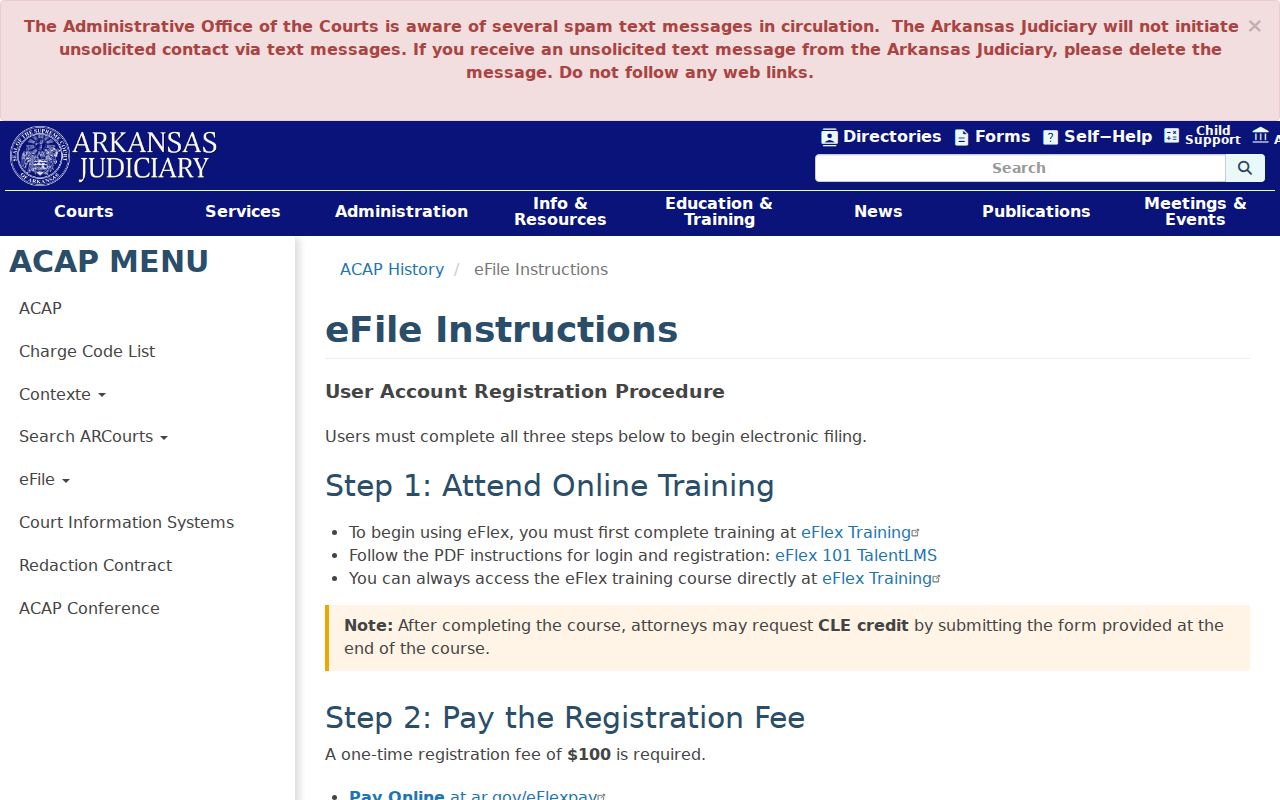
The eFlex screen sits on the filing side of the Montgomery County civil court record. Search ARCourts remains the public retrieval side.
Administrative Order 21 governs electronic filing and confidential-information duties. Its statewide fees, including registration and a new-case electronic filing surcharge, are filing costs. They are not public docket search fees. They are not Montgomery County copy prices either.
Civil Docket Settings and Hearings
A setting tells you what the court intends to handle, nothing more. It never reveals an outcome ahead of time. A motion hearing takes up one specific request. Pretrial and status settings let the judge see which issues remain open and whether the parties are ready. A bench trial puts the merits in front of the judge alone. A jury trial date can shift when earlier cases clear or a continuance request is granted.
Always read the newest Events entry, then check it against the latest notice or signed order in the file, since old dates often linger in the history after a reset. For a Circuit civil matter, confirm the current court date with the Circuit Clerk at 870-867-3521. For a District civil or small-claims case, call 870-867-2221. The judge runs the calendar. The clerk records each filed setting and communicates it.
Montgomery County Civil Docket Rulings
One habit unlocks almost any Montgomery County civil docket. A motion entry means a party asked for relief. A later order shows what the judge actually did. The filing alone decides nothing. When the Documents cell holds no link, ask the clerk for the order. Give the case number, entry date, and exact title.
"Case closed" is just as quiet about who won. Read the judgment itself, then watch for post-judgment motions, enforcement entries, satisfaction, or an appeal. An appeal can open a second docket at the higher court. If the original record says appealed, transferred, consolidated, remanded, or reopened, search both case numbers.
Montgomery County Case Lookup walks through the full name-and-number method. Use it when a result must be found before a document can be ordered.
Civil Docket Access Rules
Online access is only the first door. The Circuit Clerk, at 105 Highway 270 East, Suite 10, Mount Ida, Arkansas 71957, holds the Circuit civil files. It answers 870-867-3521. The District Court clerk sits in Suite 2 and can be reached at 870-867-2221. Request inspection or copies at the counter matching your court. Before mailing or faxing anything, call first. The clerk publishes no local form, payment instructions, ordinary-copy fee, or turnaround time.
Public access is record-specific. Administrative Order 19 governs court-record access and protected information. The Arkansas Freedom of Information Act does not replace the court’s own access framework.
A docket can be public while pieces of the case are not. An exhibit, a protected address, a minor's identity, an adoption file, or a sealed document may all sit outside the open record. Ask the clerk which rule or order governs a withheld item, and ask what access path applies to a party or other authorized requester.
Montgomery County Civil Docket Rules
The Arkansas Rules of Civil Procedure set the statewide framework for civil filings and for handling confidential information in those filings.
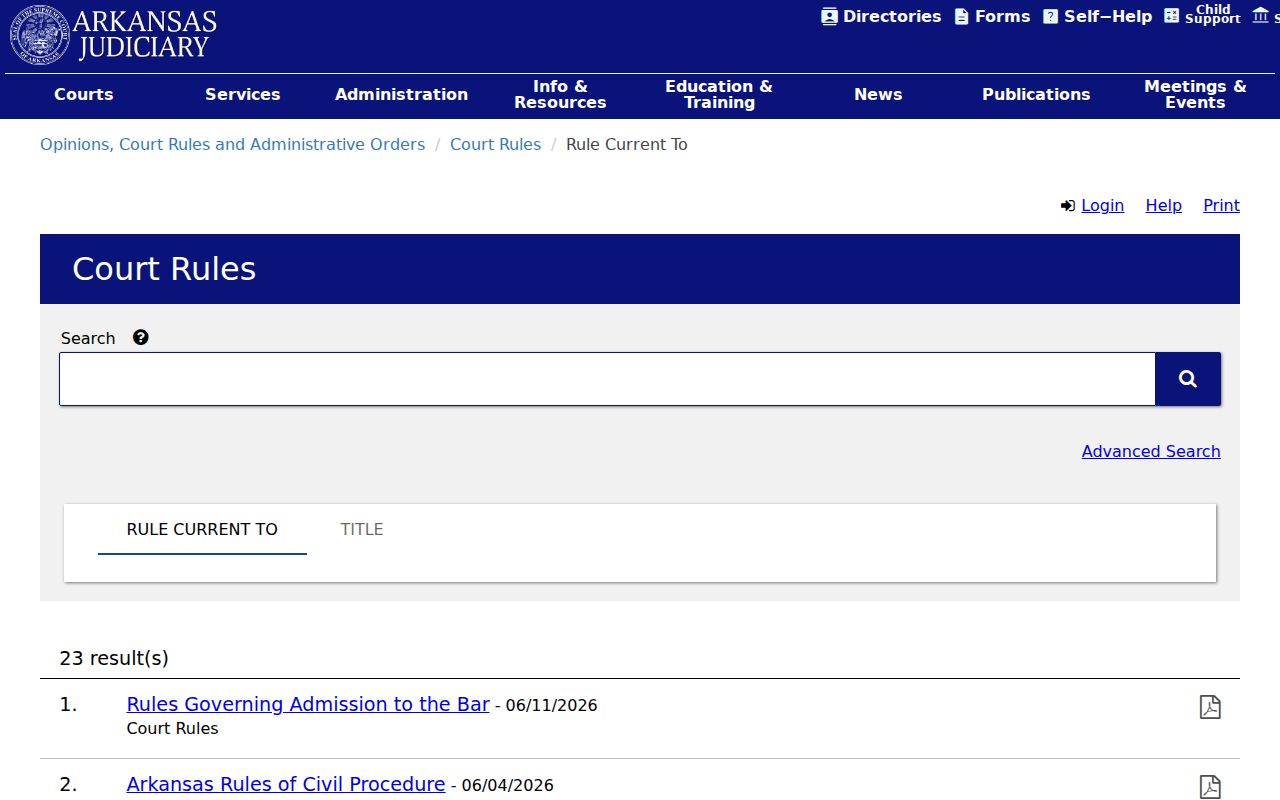
Those rules explain why a Montgomery County civil docket lists process, responses, motions, and orders in sequence. The clerk's actual file holds the legal documents behind each label.
Need a certified judgment? Give the clerk the case number, caption, entry date, and document title. Ask for a current page count. Also ask for a certification quote, accepted payment, delivery method, and processing time. A hearing transcript is a different animal. Verbatim proceedings come from the court reporter, not from a copy of the clerk's docket.